
Welcome to Pariksha Assam’s ultimate study guide for SCERT Class 6 Social Science Chapter 8 “ভাৰতীয় সভ্যতাৰ আৰম্ভণি” (Beginning of Indian Civilization). This extremely important chapter’s notes will help all the competitive exam aspirants of Assam who are preparing for exams like APSC CCE, ADRE Grade III & IV, Assam Police, Assam TET, etc.
In this chapter, we will learn how ancient people started living together and built advanced cities thousands of years ago. We will study the Harappan Civilization (also known as the Indus Valley Civilization), their houses, drainage systems, agriculture, and trade. We will also look at the reasons why such a great civilization ended. Read these notes and practice the MCQs provided below the notes to test your knowledge on the chapter.
Table of Contents
১. সভ্যতা মানে কি? (What is Civilization?)
আদিম যুগত মানুহে গাঁও পাতি বসবাস কৰিবলৈ লোৱাৰেপৰা ক্ৰমে মানুহৰ জীৱন-ধাৰণ প্ৰণালীত পৰিৱৰ্তন ঘটিবলৈ ধৰে। কৃষিৰ ক্ষেত্ৰত নিজৰ প্ৰয়োজনতকৈ অধিক উৎপাদন হ’লেই তাক ওপৰঞ্চি উৎপাদন (Surplus production) বুলি কোৱা হয়। এনে ওপৰঞ্চি উৎপাদনে ব্যৱসায়-বাণিজ্যৰ বাট মুকলি কৰিছিল আৰু ইয়েই প্ৰথমে বজাৰ আৰু পাছলৈ নগৰৰ সৃষ্টিত সহায় কৰিছিল।
এইদৰে বেছিকৈ বিকাশ লাভ কৰা ঠাইক কেন্দ্ৰ কৰি মানুহৰ চিন্তা-চৰ্চা আৰু জীৱন-প্ৰণালীয়ে যি নতুন আৰু উন্নত ৰূপ পায়, তাকেই সভ্যতা (Civilization) বুলি কোৱা হয়।
(From the time early humans started living in villages, their lifestyle began to change. When agriculture produced more than needed, it was called surplus production. This surplus led to trade, creating markets and later cities. The advanced lifestyle and thought processes that developed in these areas are called civilization.)
প্ৰাচীন সভ্যতাবোৰৰ নিৰ্দিষ্ট বৈশিষ্ট্যসমূহ (Characteristics of Ancient Civilizations):
- শিল, ধাতু, কাঠ আদি কেঁচামাল সুলভ আছিল আৰু ইয়াৰ পৰা শিল্পজাত সামগ্ৰীৰ উৎপাদনৰ ব্যৱস্থা আছিল। (Raw materials like stone, metal, wood were available for producing manufactured goods.)
- দাঁতি-কাষৰীয়া অঞ্চলবোৰৰ মাজত অৰ্থনৈতিক সম্পৰ্ক আছিল, যাৰ ফলত আভ্যন্তৰীণ আৰু বহিঃবাণিজ্য গঢ়ি উঠিছিল। (There were economic relations with neighboring regions, leading to internal and external trade.)
- লিখিত সাহিত্য, ফলক, শিলালিপি আদি সৃষ্টিশীল কাম-কাজৰ দ্বাৰা জীৱনৰ প্ৰতিফলন দেখা যায়। (Creative works like written literature, plaques, and inscriptions reflect their lives.)
- উপযুক্ত কৃষি ব্যৱস্থাৰ যোগেদি সমৃদ্ধিশালী গাঁওসমূহে নগৰলৈ খাদ্য যোগান ধৰিছিল। (Prosperous villages supplied food to cities through a good agricultural system.)
📌 Visit our main website www.studyblink.com for competitive exam book reviews, exam strategy and pdf download.
২. নৈ-পৰীয়া সভ্যতা (River-Valley Civilizations)
বজাৰ-নগৰক কেন্দ্ৰ কৰি গঢ়ি উঠা প্ৰাচীন সভ্যতাসমূহৰ বেছিভাগেই নদীৰ পাৰত বিকাশ লাভ কৰিছিল, সেয়েহে এইবোৰক নৈ-পৰীয়া সভ্যতা (River-valley civilizations) বোলে।
(Most ancient civilizations centered around market cities developed on river banks, hence they are called river-valley civilizations.)
সভ্যতাসমূহ নদীৰ পাৰত গঢ় লৈ উঠাৰ প্ৰধান কাৰণসমূহ (Reasons for civilizations growing on river banks):
(ক) নৈৰ পানীয়ে খেতি-বাতিৰ বিকাশত অৰিহণা যোগায়। (River water helped in the development of agriculture.)
(খ) জলপথে যোগাযোগৰ সুবিধা দি বেপাৰ-বাণিজ্যৰ প্ৰসাৰত সহায় কৰে। (Waterways facilitated transportation and trade.)
(গ) সাৰুৱা ভূমি, নৈ-পৰীয়া জলবায়ু, আৰু বনজ সম্পদে উন্নতিৰ বাবে অনুকূল পৰিৱেশৰ সৃষ্টি কৰে। (Fertile land, riverine climate, and forest resources created a favorable environment for progress.)
চাৰিটা প্ৰধান নৈ-পৰীয়া সভ্যতাৰ কাল আৰু অৱস্থিতি (Timeline and Location of Four Major River-Valley Civilizations):
| সভ্যতা (Civilization) | নদীৰ পাৰ (River Bank) | সংশ্লিষ্ট দেশ (Associated Countries) | সময় (Timeline) |
|---|---|---|---|
| ১. মেছ’পটেমিয়া (Mesopotamia) | টাইগ্ৰীছ আৰু ইউফ্ৰেটিছ (Tigris and Euphrates) | ইৰাণ, চিৰিয়া আৰু তুৰ্কী (Iran, Syria, Turkey) | খ্ৰী.পূ. ৩৫০০ ৰ পৰা খ্ৰী.পূ. ৫০০ লৈ (3500 BC to 500 BC) |
| ২. হৰপ্পা (Harappa) | সিন্ধু (Indus) | আফগানিস্তান, পাকিস্তান আৰু ভাৰত (Afghanistan, Pakistan, India) | খ্ৰী.পূ. ৩১৫০ ৰ পৰা খ্ৰী.পূ. ১৯০০ লৈ (3150 BC to 1900 BC) |
| ৩. মিছৰীয় (Egyptian) | নীল নদী (Nile River) | ইজিপ্ত (Egypt) | খ্ৰী.পূ. ৩১৫০ ৰ পৰা খ্ৰী.পূ. ৩০ লৈ (3150 BC to 30 BC) |
| ৪. চীনা (Chinese) | হোৱাংহো আৰু ইয়াংচি (Hwang Ho and Yangtze) | চীন (China) | খ্ৰী.পূ. ১৬০০ ৰ পৰা খ্ৰী.পূ. ১০৪৬ লৈ (1600 BC to 1046 BC) |
(Note: About 10 major civilizations developed across the world from 5000 years ago to 500 years ago.)
৩. হৰপ্পা সভ্যতা (The Harappan Civilization)
সিন্ধু নদী আৰু ইয়াৰ পাঁচখন মূল উপনৈৰ পাৰত আজিৰপৰা প্ৰায় ৪৭০০ বছৰ পূৰ্বে এক নগৰীয়া সভ্যতাৰ বিকাশ ঘটিছিল। ইয়াক সিন্ধু উপত্যকাৰ সভ্যতা (Indus Valley Civilization), হৰপ্পা সভ্যতা, বা সিন্ধু-সৰস্বতী সভ্যতা বুলিও জনা যায়।
(An urban civilization developed on the banks of the Indus river and its five main tributaries about 4700 years ago. It is known as the Indus Valley, Harappan, or Indus-Saraswati Civilization.)
- আৱিষ্কাৰ (Discovery): ব্ৰিটিছসকলে ৰে’লপথ নিৰ্মাণৰ বাবে কৰা খনন কাৰ্যত পোন প্ৰথমে বৰ্তমানৰ পাকিস্তানৰ অন্তৰ্গত ‘হৰপ্পা‘ নামৰ ঠাইত এই সভ্যতাৰ অৱশিষ্ট উদ্ধাৰ হৈছিল (সেয়ে ইয়াক হৰপ্পা সভ্যতা বোলে)। তাৰ পাছত ১৯২১ চনত ৰাখালদাস বেনাৰ্জীৰ (Rakhaldas Bandyopadhyay) নেতৃত্বত চলা খনন কাৰ্যত ‘মহেঞ্জোদাৰো’ নামৰ আন এখন নগৰৰ অৱশিষ্ট উদ্ধাৰ হৈছিল। (The remains were first found in ‘Harappa’ in present-day Pakistan during railway construction. Later in 1921, Rakhaldas Bandyopadhyay led excavations to find ‘Mohenjo-Daro’.)
- বিস্তৃতি (Extent): হৰপ্পা সভ্যতা উত্তৰ প্ৰদেশৰপৰা আফগানিস্তান সীমান্তৰ বেলুচিস্তানলৈ আৰু জম্মু-কাশ্মীৰৰপৰা গুজৰাটলৈকে বিস্তৃত আছিল। (It extended from Uttar Pradesh to Balochistan and from Jammu & Kashmir to Gujarat.)
প্ৰধান স্থানসমূহ (Major Sites): হৰপ্পা, মহেঞ্জোদাৰো, ক’ট ডিজি (Kot Diji), নৌচাৰো (Nausharo), কালিবাংগান (Kalibangan), বানাৱালী (Banawali), লোথাল (Lothal), ধোলভিৰা (Dholavira), চোৰকোটাডা (Surkotada), আৰু আলমগিৰপুৰ (Alamgirpur)।
৩.১ ঘৰ-দুৱাৰ আৰু নগৰ পৰিকল্পনা (Town Planning and Houses)
নগৰবোৰক গাঁথনিৰ ফালৰপৰা দুভাগত ভগাব পাৰি: দুৰ্গ (Citadel) আৰু নামনি চহৰ (Lower town)।
- দুৰ্গ: চহৰৰ ওখ অংশ, য’ত শাসক শ্ৰেণীৰ লোকে বাস কৰিছিল। ইয়াত শস্যৰ ভঁৰাল (Granary), ৰাজহুৱা স্নানাগাৰ (Great Bath), আৰু সভাগৃহ আছিল। (Citadel was the upper part for the ruling class, containing granaries and public baths.)
- নামনি চহৰ: সাধাৰণ প্ৰজাৰ বাসস্থান।
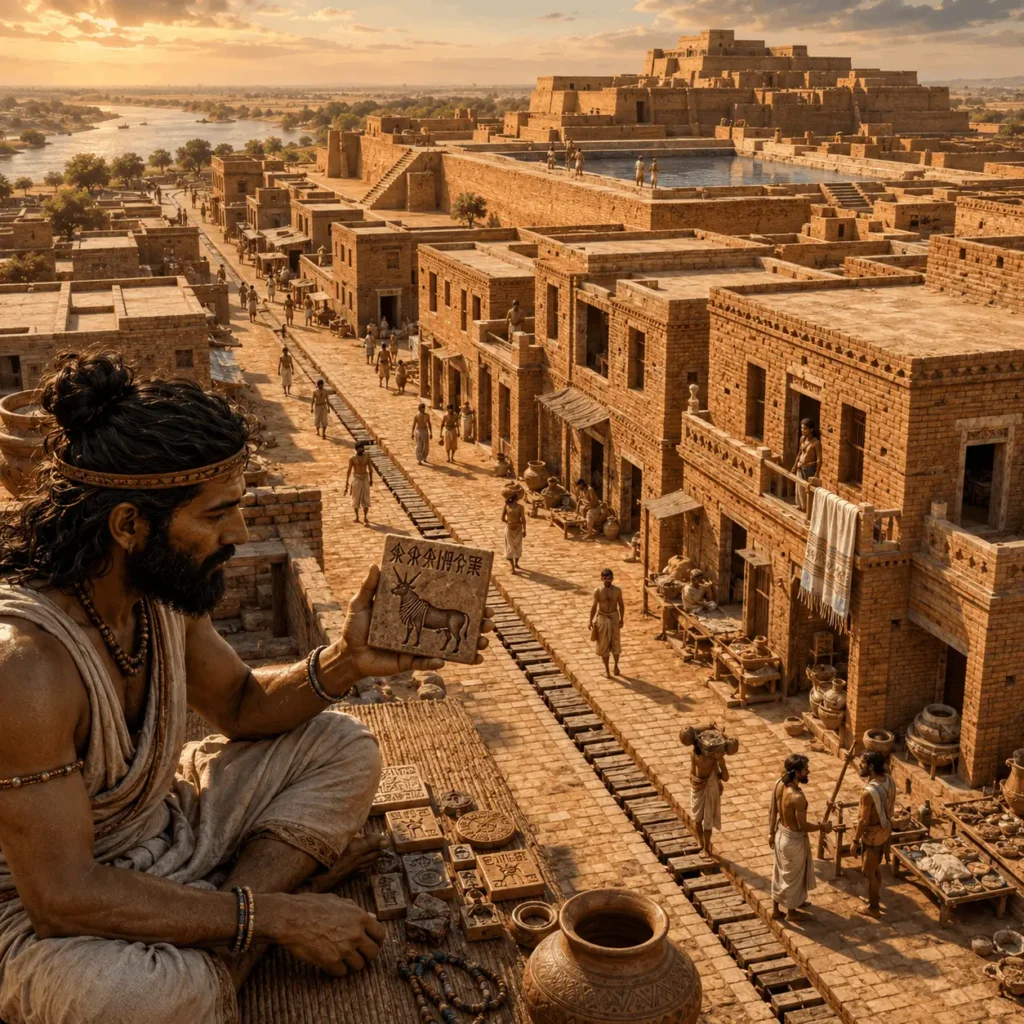
- ঘৰৰ গঠন: ঘৰবোৰ পোৰা ইটাৰে সজা দুমহলীয়া আছিল আৰু প্ৰত্যেক ঘৰতে শৌচাগাৰ, চোতাল, ৰান্ধনিঘৰ, আৰু শোৱা কোঠালী আছিল। ঘাইপথতকৈ কিছু উচ্চতাত খটখটিৰ ব্যৱস্থাৰে ঘৰবোৰ নিৰ্মাণ কৰা হৈছিল। (Houses were double-storied, made of burnt bricks, with courtyards, kitchens, and bathrooms.)
৩.২ ৰাস্তা-ঘাট আৰু জল-নিষ্কাষণ (Roads and Drainage System)
- ৰাস্তা-ঘাট (Roads): ৰাস্তাবোৰ আহল-বহল আৰু সমান্তৰাল আছিল। বাট-পথবোৰ আয়তাকাৰে (rectangular pattern) বিভক্ত আছিল। ৰাস্তাৰ ভাঁজবোৰ কোণযুক্ত নহৈ ধেনুভিৰীয়াকৈ (curved) সজা হৈছিল যাতে জন্তুৱে টনা গাড়ী সহজে পাৰ হ’ব পাৰে। (Roads were wide, parallel, and intersected in a rectangular pattern with curved corners for easy cart movement.)
- জল-নিষ্কাষণ (Drainage): পানী যোৱাৰ ব্যৱস্থা সু-পৰিকল্পিত আছিল। প্ৰত্যেক ঘৰৰ পানী ওলাই গৈ আলিবাটৰ কাষে-কাষে থকা নলাত পৰিছিল। নলাবোৰ ইটাৰ ঢাকনিৰে ঢাকি থোৱা আছিল, যিয়ে তেওঁলোকৰ চাফ-চিকুণতাৰ প্ৰতি থকা গুৰুত্ব প্ৰমাণ কৰে। (Highly planned drainage system where house drains connected to street drains, covered with brick lids, showing their focus on cleanliness.)
৩.৩ জীৱিকা (Occupation)
হৰপ্পাবাসীৰ প্ৰধান জীৱিকা আছিল কৃষি, পশুপালন, আৰু হস্তশিল্প। (Agriculture, animal husbandry, and handicrafts were the main occupations.)
কৃষি (Agriculture): ঘেহুঁ (Wheat), বাৰ্লি (Barley), সৰিয়হ (Mustard), শাক-পাচলি, ফল-মূল, আৰু কপাহ (Cotton)।
পশুপালন (Animal Husbandry): হাতী, উট, ম’হ, গৰু, ভেড়া, ষাঁড়গৰু আদি।
হস্তশিল্প (Handicrafts): পোৰা মাটিৰ সামগ্ৰী, সোণৰ আ-অলংকাৰ, তামৰ বাচন-বৰ্তন, ব্ৰঞ্জৰ সঁজুলি, বয়ন সামগ্ৰী, ইটা, কাঠৰ বস্তু, আৰু নাঁও।
৩.৪ বাণিজ্য (Trade)
- হৰপ্পাৰ লোকসকলে মেছ’পটেমিয়া আৰু পাৰস্যৰ (Persia) লগত বাণিজ্যিক যোগাযোগ স্থাপন কৰিছিল। (They traded with Mesopotamia and Persia.)
- স্থলপথ আৰু জলপথ উভয়েদি বেহা-বেপাৰ চলিছিল আৰু বিনিময় প্ৰথাৰ (Barter system) প্ৰচলন আছিল।
- গুজৰাটত অৱস্থিত লোথাল (Lothal) আৰু বেলুচিস্তানৰ চুটকাজেণ্ডৰ (Sutkagendor) আছিল উল্লেখযোগ্য বন্দৰ আৰু ব্যৱসায়িক কেন্দ্ৰ। (Lothal in Gujarat and Sutkagendor in Balochistan were major ports and trade centers.)
৩.৫ ধৰ্মীয় বিশ্বাস আৰু ছীল-মোহৰ (Religious Beliefs and Seals)
ধৰ্ম (Religion): মাটিৰে নিৰ্মিত নাৰী মূৰ্তিক (Mother Goddess) ধৰ্মীয় প্ৰতীক বুলি ধৰা হয়। ছীল-মোহৰত খোদিত পশুৰে বেষ্টিত পুৰুষৰ প্ৰতিচ্ছবিক ‘পশুপতি শিৱ‘ (Pashupati Shiva) বুলি কোৱা হয়। ‘ইউনিকৰ্ণ’ (Unicorn – এশিঙীয়া জন্তু) তেওঁলোকৰ ধৰ্মীয় বিশ্বাসৰ লগত জড়িত আছিল। (Worshipped Mother Goddess, Pashupati Shiva, and the mythical Unicorn.)
ছীল-মোহৰ (Seals): মালিকীস্বত্বৰ প্ৰতীক (Symbol of ownership) হিচাপে মাটি আৰু তামেৰে মোহৰ সজা হৈছিল য’ত ষাঁড়গৰু, ভেড়া, বাঘ, হাতীৰ চিত্ৰ খোদিত আছিল। এইবোৰ বাণিজ্য আৰু প্ৰশাসনিক কাৰ্যত ব্যৱহাৰ হৈছিল। (Clay and copper seals with animal carvings were used for trade and administration.)
৩.৬ ভাষা আৰু লিপি (Language and Script)
- হৰপ্পাবাসীৰ লিপিৰ আখৰবোৰ আছিল চিত্ৰলিপি (Pictographic script), অৰ্থাৎ ছবিক আখৰ হিচাপে ব্যৱহাৰ কৰা হৈছিল। এতিয়ালৈ প্ৰায় ৫০০ চিত্ৰলিপি উদ্ধাৰ হৈছে।
- বাক্যবোৰ সোঁফালৰপৰা বাওঁফাললৈ (From right to left) লিখা হৈছিল যদিও এই লিপিৰ পাঠোদ্ধাৰ এতিয়াও সম্ভৱ হোৱা নাই। (They used an undeciphered pictographic script written from right to left.)
📌SCERT Assam Social Science Class 6 Textbook (Assamese Medium) PDF
৩.৭ হৰপ্পা সভ্যতাৰ পতন (Decline of the Harappan Civilization)
খ্ৰী.পূ. ১৫০০ মানৰপৰা হৰপ্পা সভ্যতাৰ পতন আৰম্ভ হোৱা বুলি ধাৰণা কৰা হয়। ইয়াৰ মূল কাৰণসমূহৰ ভিতৰত উল্লেখযোগ্য হ’ল: (ক) ভূমিকম্প অথবা বানপানীৰ নিচিনা প্ৰাকৃতিক দুৰ্যোগ (Natural disasters like earthquakes or floods)। (খ) জনসংখ্যা বৃদ্ধি আৰু সীমিত সম্পদে আৰ্থিকভাৱে জুৰুলা কৰা (Population growth and limited resources)। (গ) সিন্ধু নদীয়ে গতি সলাই খেতিপথাৰ বিনষ্ট কৰা (Indus river changing its course)। (ঘ) জলবায়ুৰ পৰিৱৰ্তনে মাটিৰ গুণাগুণ নষ্ট কৰা (Climate change affecting soil fertility)। (ঙ) বহিৰাগত শক্তিৰ আক্ৰমণ (Invasion by foreign forces)।
(The decline started around 1500 BC due to natural disasters, resource exhaustion, river shifting course, climate change, and possible foreign invasions.)
মেঘালয়ীয় যুগ (Meghalayan Age): প্ৰায় ৪,২০০ বছৰ পূৰ্বে আৰম্ভ হোৱা পৃথিৱীৰ শেহতীয়া যুগ। এই যুগত ভয়াবহ খৰাং (drought) অৱস্থাৰ সৃষ্টি হৈছিল যাৰ ফলত সিন্ধু, মেছ’পটেমিয়া আৰু ইজিপ্তীয় সভ্যতা বিশেষভাৱে ক্ষতিগ্ৰস্ত হৈছিল। (A geological age starting 4200 years ago marked by a mega-drought that severely damaged the Indus, Mesopotamian, and Egyptian civilizations.)
15 Important Practice MCQs (১৫ টা গুৰুত্বপূৰ্ণ প্ৰশ্নোত্তৰ)
1. সিন্ধু উপত্যকাৰ সভ্যতাত উদ্ধাৰ হোৱা মোহৰবোৰত কোনবিধ কাল্পনিক/এশিঙীয়া জন্তুৰ চিত্ৰ প্ৰায়ে দেখা যায় যাক ধৰ্মীয় বিশ্বাসৰ লগত জড়িত বুলি ধৰা হয়? (Which mythical/one-horned animal is often seen depicted on the seals of the Indus Valley Civilization, believed to be associated with religious beliefs?)
(A) পশুপতি (Pashupati)
(B) ইউনিকৰ্ণ (Unicorn)
(C) বগা হাতী (White Elephant)
(D) মেক’ক (Macaque)
শুদ্ধ উত্তৰ: (B) ইউনিকৰ্ণ (Unicorn)
ব্যাখ্যা: হৰপ্পাৰ ছীল-মোহৰবোৰত ‘ইউনিকৰ্ণ’ নামৰ এশিঙীয়া জন্তু এবিধৰ প্ৰতিচ্ছবি দেখা যায়, যিটো তেওঁলোকৰ ধৰ্মীয় বিশ্বাসৰ লগত জড়িত আছিল।
2. হৰপ্পা সভ্যতাৰ আৱিষ্কাৰৰ লগত তলৰ কোনগৰাকী ব্যক্তিৰ নাম প্ৰত্যক্ষভাৱে জড়িত, যাৰ নেতৃত্বত ১৯২১ চনত মহেঞ্জোদাৰোত খনন কাৰ্য চলিছিল? (Which of the following persons is directly associated with the discovery of the Harappan civilization, under whose leadership the excavation in Mohenjo-Daro was conducted in 1921?)
(A) আলেকজেণ্ডাৰ কানিংহাম (Alexander Cunningham)
(B) দয়াৰাম ছাহানী (Daya Ram Sahni)
(C) ৰাখালদাস বেনাৰ্জী (Rakhaldas Bandyopadhyay)
(D) জন মাৰ্শ্বেল (John Marshall)
শুদ্ধ উত্তৰ: (C) ৰাখালদাস বেনাৰ্জী (Rakhaldas Bandyopadhyay)
ব্যাখ্যা: ১৯২১ চনত ৰাখালদাস বেনাৰ্জীৰ নেতৃত্বত চলা খনন কাৰ্যত মহেঞ্জোদাৰো নামৰ নগৰখনৰ অৱশিষ্ট উদ্ধাৰ হৈছিল।
3. হৰপ্পা সভ্যতাৰ নগৰ পৰিকল্পনাৰ সন্দৰ্ভত তলৰ কোনটো উক্তি ভুল? (Which of the following statements is incorrect regarding the town planning of the Harappan civilization?)
(A) নগৰবোৰক দুৰ্গ আৰু নামনি চহৰ এই দুভাগত ভগোৱা হৈছিল। (The cities were divided into a citadel and a lower town.)
(B) ৰাস্তাৰ ভাঁজবোৰ কোণযুক্ত নহৈ ধেনুভিৰীয়াকৈ সজা হৈছিল। (The corners of the roads were curved rather than angular.)
(C) বেছিভাগ ঘৰেই খেৰ আৰু বাঁহেৰে নিৰ্মিত আছিল। (Most of the houses were made of thatch and bamboo.)
(D) পানী যোৱা নলাবোৰ ইটাৰ ঢাকনিৰে ঢাকি থোৱা আছিল। (The drainage canals were covered with brick lids.)
শুদ্ধ উত্তৰ: (C) বেছিভাগ ঘৰেই খেৰ আৰু বাঁহেৰে নিৰ্মিত আছিল। (Most of the houses were made of thatch and bamboo.)
ব্যাখ্যা: হৰপ্পা সভ্যতাৰ আটাইতকৈ উল্লেখযোগ্য বৈশিষ্ট্য আছিল পকী ইটাৰ ব্যৱহাৰ। বেছিভাগ ঘৰেই দুমহলীয়া আৰু ইটাৰে সজা আছিল, খেৰ বা বাঁহেৰে নহয়।
4. তলৰ তালিকাখন মিলাওক: (Match the following table:)
| (a) হৰপ্পা সভ্যতা (Harappan Civilization) | 1. নীল নদী (Nile River) |
| (b) মিছৰীয় সভ্যতা (Egyptian Civilization) | 2. হোৱাংহো আৰু ইয়াংচি (Hwang Ho and Yangtze) |
| (c) মেছ’পটেমিয়া সভ্যতা (Mesopotamian Civilization) | 3. সিন্ধু নদী (Indus River) |
| (d) চীনা সভ্যতা (Chinese Civilization) | 4. টাইগ্ৰীছ আৰু ইউফ্ৰেটিছ (Tigris and Euphrates) |
(A) a-3, b-1, c-4, d-2
(B) a-1, b-3, c-2, d-4
(C) a-3, b-4, c-1, d-2
(D) a-4, b-1, c-2, d-3
শুদ্ধ উত্তৰ: (A) a-3, b-1, c-4, d-2
ব্যাখ্যা: হৰপ্পা সভ্যতা সিন্ধু নদীৰ পাৰত, মিছৰীয় নীল নদীৰ পাৰত, মেছ’পটেমিয়া টাইগ্ৰীছ আৰু ইউফ্ৰেটিছৰ পাৰত, আৰু চীনা সভ্যতা হোৱাংহো আৰু ইয়াংচি নদীৰ পাৰত গঢ়ি উঠিছিল।
5. দাবী (Assertion – A): হৰপ্পা সভ্যতাৰ লোকসকলৰ মেছ’পটেমিয়া আৰু পাৰস্যৰ লগত বাণিজ্যিক সম্পৰ্ক আছিল। (The people of the Harappan civilization had trade relations with Mesopotamia and Persia.)
কাৰণ (Reason – R): হৰপ্পা সভ্যতাৰ ছীল-মোহৰ আৰু মাটিৰ পাত্ৰ মেছ’পটেমিয়াত পোৱা গৈছে আৰু মেছ’পটেমিয়াৰ মোহৰ হৰপ্পাত উদ্ধাৰ হৈছে। (Harappan seals and pottery have been found in Mesopotamia, and Mesopotamian seals have been recovered in Harappa.)
(A) A আৰু R দুয়োটা শুদ্ধ আৰু R, A ৰ সঠিক ব্যাখ্যা। (Both A and R are true and R is the correct explanation of A.)
(B) A আৰু R দুয়োটা শুদ্ধ কিন্তু R, A ৰ সঠিক ব্যাখ্যা নহয়। (Both A and R are true but R is not the correct explanation of A.)
(C) A শুদ্ধ কিন্তু R ভুল। (A is true but R is false.)
(D) A ভুল কিন্তু R শুদ্ধ। (A is false but R is true.)
শুদ্ধ উত্তৰ: (A) A আৰু R দুয়োটা শুদ্ধ আৰু R, A ৰ সঠিক ব্যাখ্যা। (Both A and R are true and R is the correct explanation of A.)
ব্যাখ্যা: ইখন ঠাইৰ সামগ্ৰী সিখন ঠাইত উদ্ধাৰ হোৱাটোৱে স্পষ্টভাৱে প্ৰমাণ কৰে যে দুয়োখন প্ৰাচীন সভ্যতাৰ মাজত বেহা-বেপাৰ আৰু বাণিজ্যিক আদান-প্ৰদান আছিল।
6. ‘সৰস্বতী নদী’ক ভাৰত আৰু পাকিস্তানত বৰ্তমান ক্ৰমে কি নামেৰে জনা যায়? (By what names is the ‘Saraswati River’ currently known in India and Pakistan respectively?)
(A) গংগা আৰু যমুনা (Ganga and Yamuna)
(B) ঘগ্নাৰ আৰু হকৰা (Ghaggar and Hakra)
(C) শতদ্ৰু আৰু বিপাশা (Sutlej and Beas)
(D) লুণী আৰু কাবেৰী (Luni and Cauvery)
শুদ্ধ উত্তৰ: (B) ঘগ্নাৰ আৰু হকৰা (Ghaggar and Hakra)
ব্যাখ্যা: প্ৰাচীন সৰস্বতী নদীৰ কাষত থকা অসংখ্য ঠাইক বৰ্তমান ভাৰতত ‘ঘগ্নাৰ’ আৰু পাকিস্তানত ‘হকৰা’ বুলি অভিহিত কৰা হয়।
7. হৰপ্পা সভ্যতাৰ লিপিৰ বৈশিষ্ট্যৰ ক্ষেত্ৰত তলৰ কোনটো উক্তি শুদ্ধ? (Which of the following statements is correct regarding the characteristics of the Harappan script?)
(A) লিপিখন সংস্কৃত ভাষাত লিখা হৈছিল। (The script was written in Sanskrit language.)
(B) লিপিৰ আখৰবোৰ বাওঁফালৰ পৰা সোঁফাললৈ লিখা হৈছিল। (The characters of the script were written from left to right.)
(C) এই লিপিৰ আখৰবোৰ আছিল চিত্ৰলিপি আৰু ইয়াৰ পাঠোদ্ধাৰ এতিয়াও সম্ভৱ হোৱা নাই। (The characters of this script were pictographic and its decipherment is not yet possible.)
(D) এতিয়ালৈকে মাত্ৰ ৫০ টা চিত্ৰলিপিহে উদ্ধাৰ হৈছে। (So far, only 50 pictographs have been recovered.)
শুদ্ধ উত্তৰ: (C) এই লিপিৰ আখৰবোৰ আছিল চিত্ৰলিপি আৰু ইয়াৰ পাঠোদ্ধাৰ এতিয়াও সম্ভৱ হোৱা নাই। (The characters of this script were pictographic and its decipherment is not yet possible.)
ব্যাখ্যা: হৰপ্পাবাসীৰ লিপি আছিল চিত্ৰলিপি যি সোঁফালৰ পৰা বাওঁফাললৈ লিখা হৈছিল। এতিয়ালৈ প্ৰায় ৫০০ চিত্ৰলিপি উদ্ধাৰ হৈছে যদিও এইবোৰ এতিয়াও কোনেও পঢ়িব পৰা নাই।
8. প্ৰায় ৪,২০০ বছৰ পূৰ্বে আৰম্ভ হোৱা আৰু সিন্ধু উপত্যকাৰ সভ্যতাত ভয়াবহ খৰাং অৱস্থাৰ সৃষ্টি কৰা পৃথিৱীৰ শেহতীয়া ভূতাত্ত্বিক যুগটোক কি বুলি জনা যায়? (What is the recent geological age of the earth, which started about 4,200 years ago and caused a severe drought in the Indus Valley Civilization, known as?)
(A) হিমযুগ (Ice Age)
(B) মেঘালয়ীয় যুগ (Meghalayan Age)
(C) জুৰাছিক যুগ (Jurassic Age)
(D) হল’চিন যুগ (Holocene Age)
শুদ্ধ উত্তৰ: (B) মেঘালয়ীয় যুগ (Meghalayan Age)
ব্যাখ্যা: প্ৰায় ৪,২০০ বছৰ পূৰ্বে আৰম্ভ হোৱা মেঘালয়ীয় যুগত হোৱা জলবায়ুৰ পৰিৱৰ্তন আৰু খৰাঙৰ ফলত সিন্ধু, মেছ’পটেমিয়া আৰু ইজিপ্তীয় সভ্যতা ক্ষতিগ্ৰস্ত হৈছিল।
9. হৰপ্পা সভ্যতাৰ নগৰ গাঁথনিৰ ‘দুৰ্গ’ (Citadel) অংশত তলৰ কোনটো নিৰ্মাণ পোৱা হোৱা নাছিল? (Which of the following structures was NOT found in the ‘Citadel’ part of the Harappan city structure?)
(A) শস্যৰ ভঁৰাল (Granary)
(B) ৰাজহুৱা স্নানাগাৰ (Great Bath)
(C) সাধাৰণ প্ৰজাৰ বাসস্থান (Dwellings of common people)
(D) সভাগৃহ (Assembly Hall)
শুদ্ধ উত্তৰ: (C) সাধাৰণ প্ৰজাৰ বাসস্থান (Dwellings of common people)
ব্যাখ্যা: সাধাৰণ প্ৰজাৰ বাসস্থানসমূহ চহৰৰ ‘নামনি চহৰ’ অংশতহে আছিল। দুৰ্গ বা ওখ অংশত শস্যৰ ভঁৰাল, স্নানাগাৰ আদি ৰাজহুৱা গৃহসমূহ আছিল য’ত শাসক শ্ৰেণীয়ে বাস কৰিছিল।
10. তলৰ কোনখন ঠাই হৰপ্পা সভ্যতাৰ লগত জড়িত এখন উল্লেখযোগ্য সমুদ্ৰ বন্দৰ আৰু ব্যৱসায়িক কেন্দ্ৰ আছিল? (Which of the following places was a significant seaport and trade center associated with the Harappan civilization?)
(A) কালিবাংগান (Kalibangan)
(B) হৰপ্পা (Harappa)
(C) ৰূপাৰ (Ropar)
(D) লোথাল (Lothal)
শুদ্ধ উত্তৰ: (D) লোথাল (Lothal)
ব্যাখ্যা: বৰ্তমানৰ গুজৰাট ৰাজ্যত অৱস্থিত লোথাল এখন সমুদ্ৰৰ পাৰত থকা উল্লেখযোগ্য বন্দৰ আৰু ব্যৱসায়িক কেন্দ্ৰ আছিল।
11. হৰপ্পা সভ্যতাৰ লোকসকলে কৃষিকাৰ্যত তলৰ কোনবিধ শস্যৰ খেতি কৰাৰ প্ৰমাণ পোৱা গৈছে? (Evidence of cultivation of which of the following crops by the people of the Harappan civilization has been found?)
(i) ঘেহুঁ আৰু বাৰ্লি (Wheat and Barley)
(ii) সৰিয়হ আৰু কপাহ (Mustard and Cotton)
(iii) চাহ আৰু কফি (Tea and Coffee)
(A) কেৱল (i) (Only i)
(B) কেৱল (i) আৰু (ii) (Only i and ii)
(C) কেৱল (ii) আৰু (iii) (Only ii and iii)
(D) আটাইকেইটা শুদ্ধ (All are correct)
শুদ্ধ উত্তৰ: (B) কেৱল (i) আৰু (ii) (Only i and ii)
ব্যাখ্যা: হৰপ্পাবাসীয়ে ঘেহুঁ, বাৰ্লি, সৰিয়হ, শাক-পাচলি, ফল-মূল আৰু কপাহৰ খেতি কৰিছিল। চাহ আৰু কফিৰ খেতিৰ কোনো প্ৰমাণ তেতিয়াৰ সময়ত পোৱা হোৱা নাই।
12. হৰপ্পা সভ্যতাৰ পতনৰ কাৰণ হিচাপে পণ্ডিতসকলে আগবঢ়োৱা যুক্তিসমূহৰ ভিতৰত তলৰ কোনটো নপৰে? (Which of the following is NOT among the reasons put forward by scholars for the decline of the Harappan civilization?)
(A) সিন্ধু নদীয়ে গতি সলাই খেতিপথাৰ বিনষ্ট কৰা (The Indus river changing its course and destroying agricultural fields)
(B) ভূমিকম্প অথবা বানপানীৰ নিচিনা প্ৰাকৃতিক দুৰ্যোগ (Natural disasters like earthquakes or floods)
(C) মহামাৰীৰ ফলত সমগ্ৰ জনসংখ্যাৰ হঠাতে মৃত্যু (Sudden death of the entire population due to a pandemic)
(D) বহিৰাগত শক্তিৰ আক্ৰমণ (Invasion by external forces)
শুদ্ধ উত্তৰ: (C) মহামাৰীৰ ফলত সমগ্ৰ জনসংখ্যাৰ হঠাতে মৃত্যু (Sudden death of the entire population due to a pandemic)
ব্যাখ্যা: পাঠ্যপুথিত হৰপ্পা পতনৰ কাৰণ হিচাপে ভূমিকম্প, বানপানী, সিন্ধুৰ গতি সলনি, জলবায়ু পৰিৱৰ্তন, সম্পদৰ নাটনি আৰু বহিৰাগত আক্ৰমণৰ কথা উল্লেখ আছে, কিন্তু মহামাৰীৰ কথা স্পষ্টকৈ উল্লেখ নাই।
13. বৰ্তমানৰ বেলুচিস্তানৰ অন্তৰ্গত কোনখন ঠাই বেবিলন আৰু হৰপ্পাৰ ব্যৱসায়িক আদান-প্ৰদানৰ কেন্দ্ৰ আছিল? (Which place in present-day Balochistan was the center of trade exchange between Babylon and Harappa?)
(A) চুটকাজেণ্ডৰ (Sutkagendor)
(B) ধোলভিৰা (Dholavira)
(C) বানাৱালী (Banawali)
(D) আলমগিৰপুৰ (Alamgirpur)
শুদ্ধ উত্তৰ: (A) চুটকাজেণ্ডৰ (Sutkagendor)
ব্যাখ্যা: লোথালৰ দৰে বেলুচিস্তানৰ অন্তৰ্গত চুটকাজেণ্ডৰ (Sutkagendor) আছিল বেবিলন আৰু হৰপ্পাৰ মাজত বেপাৰ-বাণিজ্যৰ প্ৰধান কেন্দ্ৰ।
14. মেছ’পটেমিয়া সভ্যতা কোন দুখন নদীৰ পাৰত গঢ়ি উঠিছিল? (The Mesopotamian civilization developed on the banks of which two rivers?)
(A) হোৱাংহো আৰু ইয়াংচি (Hwang Ho and Yangtze)
(B) টাইগ্ৰীছ আৰু ইউফ্ৰেটিছ (Tigris and Euphrates)
(C) গংগা আৰু যমুনা (Ganga and Yamuna)
(D) আমাজন আৰু নীল (Amazon and Nile)
শুদ্ধ উত্তৰ: (B) টাইগ্ৰীছ আৰু ইউফ্ৰেটিছ (Tigris and Euphrates)
ব্যাখ্যা: মেছ’পটেমিয়া সভ্যতা (বৰ্তমানৰ ইৰাণ, চিৰিয়া, তুৰ্কী) টাইগ্ৰীছ আৰু ইউফ্ৰেটিছ নদীৰ পাৰত খ্ৰী.পূ. ৩৫০০ ৰ পৰা বিকাশ লাভ কৰিছিল।
15. হৰপ্পাৰ ছীল-মোহৰসমূহ প্ৰধানকৈ কি কাৰ্যত ব্যৱহাৰ কৰা হৈছিল? (For what purpose were the Harappan seals primarily used?)
(A) ধৰ্মীয় উপাসনাৰ বাবে (For religious worship)
(B) ঘৰ সজাবৰ বাবে (For decorating houses)
(C) মালিকীস্বত্বৰ প্ৰতীক হিচাপে বাণিজ্য আৰু প্ৰশাসনিক কাৰ্যত (As a symbol of ownership in trade and administrative work)
(D) ল’ৰা-ছোৱালীৰ পুতলা হিচাপে (As toys for children)
শুদ্ধ উত্তৰ: (C) মালিকীস্বত্বৰ প্ৰতীক হিচাপে বাণিজ্য আৰু প্ৰশাসনিক কাৰ্যত (As a symbol of ownership in trade and administrative work)
ব্যাখ্যা: মাটি আৰু তামেৰে সজা এই মোহৰবোৰ মালিকীস্বত্বৰ প্ৰতীক আছিল, যিবোৰ বেপাৰ-বাণিজ্য আৰু প্ৰশাসনিক কাম-কাজত ছীল মাৰিবলৈ ব্যৱহাৰ কৰা হৈছিল।
Important Revision Points
📌 ওপৰঞ্চি উৎপাদন (Surplus Production): কৃষিৰ অতিৰিক্ত উৎপাদনেই ব্যৱসায়, বজাৰ আৰু পাছলৈ নগৰ আৰু সভ্যতাৰ সৃষ্টি কৰিছিল। (Surplus agricultural production led to the birth of trade, markets, cities, and eventually civilization.)
📌 মেছ’পটেমিয়া সভ্যতা (Mesopotamian Civilization): টাইগ্ৰীছ আৰু ইউফ্ৰেটিছ নদীৰ পাৰত (বৰ্তমান ইৰাণ, চিৰিয়া, তুৰ্কী) খ্ৰী.পূ. ৩৫০০ ত গঢ়ি উঠিছিল। (Developed on the Tigris and Euphrates rivers around 3500 BC.)
📌 হৰপ্পা সভ্যতাৰ বিস্তৃতি (Extent of Harappan Civ.): সিন্ধু আৰু ৫ খন উপনৈৰ পাৰত গঢ় লৈ উঠা এই সভ্যতাৰ আৱিষ্কাৰ ১৯২১ চনত ৰাখালদাস বেনাৰ্জীৰ নেতৃত্বত মহেঞ্জোদাৰোত হৈছিল। (Discovered in 1921 under Rakhaldas Bandyopadhyay at Mohenjo-Daro, located on the Indus and its 5 tributaries.)
📌 সৰস্বতী নদী (Saraswati River): ঋগ্বেদত উল্লেখ থকা এই নদীক বৰ্তমান ভাৰতত ‘ঘগ্নাৰ’ আৰু পাকিস্তানত ‘হকৰা’ বুলি জনা যায়। (Ancient Saraswati is known as Ghaggar in India and Hakra in Pakistan.)
📌 নগৰ পৰিকল্পনা (Town Planning): হৰপ্পাৰ নগৰ দুৰ্গ (ওখ অংশ) আৰু নামনি চহৰত বিভক্ত আছিল। ৰাস্তাবোৰ সমান্তৰাল আৰু নলাবোৰ ইটাৰে ঢকা আছিল। (Cities were divided into Citadel and Lower Town with parallel roads and brick-covered drainage.)
📌 লোথাল (Lothal): গুজৰাটত অৱস্থিত হৰপ্পা সভ্যতাৰ এক গুৰুত্বপূৰ্ণ বন্দৰ আৰু বাণিজ্য কেন্দ্ৰ আছিল। (Lothal in Gujarat was a major port and trade center.)
📌 ইউনিকৰ্ণ আৰু পশুপতি (Unicorn & Pashupati): হৰপ্পাৰ ধৰ্মীয় বিশ্বাসৰ প্ৰতীক হিচাপে ছীল-মোহৰত ইউনিকৰ্ণ আৰু পশুপতি শিৱৰ চিত্ৰ খোদিত আছিল। (Seals featured Unicorn and Pashupati Shiva representing their religious beliefs.)
📌 চিত্ৰলিপি (Pictographic Script): হৰপ্পাৰ লিপি সোঁফালৰ পৰা বাওঁফাললৈ লিখা হৈছিল যি আজিও অপাঠ্য। (Their undeciphered pictographic script was written from right to left.)
📌 মেঘালয়ীয় যুগ (Meghalayan Age): ৪২০০ বছৰ পুৰণি এই যুগত হোৱা খৰাঙে হৰপ্পা সভ্যতাৰ পতনত অৰিহণা যোগাইছিল। (A mega-drought during the Meghalayan Age, starting 4200 years ago, contributed to the civilization’s decline.)
- Read Here: Social Sciene Class 6 Chapter 7 Notes- মানুহৰ জীৱন-প্ৰণালীৰ বিকাশ
- Read Here: Social Sciene Class 6 Chapter 6 Notes- ইতিহাস লিখনত সময় গণনা, উৎস আৰু ভাৰতবৰ্ষ
- Read Here: Social Science Class 6 Chapter 5 Notes- ভাৰত: পৰিচয় আৰু ভৌগোলিক বৈশিষ্ট্য
- Read Here: Social Science Class 6 Chapter 4 Notes- দেশ-মহাদেশৰ কথা: জাপান
- Read Here: Social Science Class 6 Chapter 3 Notes- ভূ-অৱয়ব আৰু মানুহ
- Read Here: Social Science Class 6 Chapter 2 Notes- সময় মণ্ডল আৰু মানচিত্ৰ
- Read Here: Social Science Class 6 Chapter 1 Notes- আমাৰ পৃথিৱী

Hi, I’m Nirmal Thakuria, the founder of StudyBlink.com. I’m an educator and a competitive exam aspirant with a strong interest in helping students prepare better.
I have cleared competitive examinations such as SSC CGL and ADRE (Assam Direct Recruitment Examination – 1). At present, I’m preparing for the UPSC Civil Services Examination while continuing to create useful educational content for students and exam aspirants.
1 thought on “SCERT Assam Class 6 Social Science Chapter 8 ভাৰতীয় সভ্যতাৰ আৰম্ভণি Complete Study Notes for Exam”