


Continuing the series of our Social Science study notes, today we will discusse about chapter 10. This complete study guide for SCERT Class 6 Social Science Chapter 10 ভাৰতীয় সংস্কৃতিৰ ভেটি (Foundation of Indian Culture), is specially designed for students and aspirants preparing for Assam State Competitive Exams like APSC CCE, ADRE Grade III & IV, Assam Police, and Assam TET.
In this chapter, you will learn about the roots of ancient Indian culture, the Vedic period, and the rise of important philosophies like Jainism, Buddhism, and materialism. We will also explore the deep-rooted tribal beliefs of India. The language used in these notes is very simple so that everyone can understand easily. Read these notes carefully and practice the MCQs given below to test yourself.
Table of Contents
বৈদিক যুগ আৰু বেদ (The Vedic Period and Vedas)
ভাৰতীয় সংস্কৃতি কেইবাহাজাৰ বছৰ পুৰণি। শিল্প, সাহিত্য, ধৰ্ম, বিজ্ঞান, সংগীত, নৃত্য আদি ভাৰতীয় সংস্কৃতিৰ প্ৰধান উপাদান। (Indian culture is thousands of years old. Art, literature, religion, science, music, and dance are its main components.)
- বেদ (Vedas): বেদ হৈছে সংস্কৃত ভাষাত ৰচিত ভাৰতৰ প্ৰাচীন আৰু পৱিত্ৰ গ্ৰন্থ। সংস্কৃত ভাষাত ‘বেদ’ মানে হ’ল ‘জ্ঞান’ (Knowledge)। সেয়ে বেদক জ্ঞান আৰু প্ৰজ্ঞাৰ উৎস বুলি গণ্য কৰা হয়।
- সময়কাল (Timeline): খ্ৰীষ্টপূৰ্ব ১৫০০ ৰ পৰা ৫০০ ৰ ভিতৰত (Between 1500 BC and 500 BC) চাৰিখন বেদ প্ৰণয়ন কৰা হৈছিল: ঋগবেদ (Rigveda), সামবেদ (Samaveda), যজুৰ্বেদ (Yajurveda) আৰু অথৰ্ববেদ (Atharvaveda)।
- আৰ্যসকলৰ অৱস্থান (Location of Aryans): সম্প্ৰতি লুপ্ত হোৱা সৰস্বতী নদীৰ (Saraswati river) পাৰত আৰ্যসকলে প্ৰথমে বাস কৰিবলৈ লৈছিল, যি অঞ্চলটোক ‘সপ্তসিন্ধু’ (Saptasindhu) নামেৰে জনা যায়। পাছলৈ তেওঁলোকে গংগা উপত্যকাত (Ganga valley) নিজৰ খোপনি পুতিছিল।

1. বৈদিক যুগৰ সমাজ ব্যৱস্থা (Society in the Vedic Period)
পিতৃপ্ৰধান সমাজ (Patriarchal Society): বৈদিক যুগৰ সমাজ পিতৃপ্ৰধান আছিল আৰু পিতৃ আছিল পৰিয়ালৰ মুৰব্বী। (The Vedic society was patriarchal, and the father was the head of the family.)
সমাজৰ গোটসমূহ (Units of Society):
- কুল বা গৃহ (Kula or Griha): আটাইতকৈ সৰু গোট বা পৰিয়াল, যাৰ মুৰব্বীক ‘গৃহপতি’ (Grihapati) বোলা হৈছিল।
- গ্ৰাম (Grama): কেইটামান ‘কুল’ৰ সমষ্টি, যাৰ মুৰব্বীক ‘গ্ৰামণী’ (Gramani) বোলা হৈছিল।
- বিশ (Vish): কেইবাখনো গাঁও লগ লাগি গঠিত, যাৰ মুৰব্বী আছিল ‘বিশপতি’ (Vishpati)।
- জন (Jana): আটাইতকৈ ডাঙৰ ৰাজনৈতিক গোট, যাৰ মুৰব্বীক ‘ৰাজন’ (Rajan) বোলা হৈছিল।
ৰাজনক সহায় কৰিবলৈ সেনানী (Senani), পুৰোহিত (Purohita), সভা (Sabha) আৰু সমিতি (Samiti) আছিল।
নাৰীৰ স্থান (Position of Women): ধৰ্মীয় আৰু ৰাজনৈতিক কাম-কাজত মহিলাসকলেও সমানেই অংশগ্ৰহণ কৰিছিল। বৈদিক যুগৰ উল্লেখযোগ্য নাৰীসকল হ’ল— বিশ্বৱাৰা, লোপামুদ্ৰা, ঘোষ, অপলা আদি। (Women participated equally in religious and political activities. Famous women of the Vedic period were Vishwavara, Lopamudra, Ghosha, and Apala.)
📌 Visit our main website www.studyblink.com for competitive exam book reviews, exam strategy and pdf download.
2. বৈদিক চিন্তাধাৰা (Vedic Philosophy)
- উপকাৰৰ হকে ‘যজ্ঞ’ (Yajna) নামৰ আচাৰ-অনুষ্ঠানৰ ব্যৱস্থা আছিল আৰু ‘অগ্নি’ দেৱতাৰ প্ৰাৰ্থনা আছিল প্ৰধান উপাসনা কৰ্ম। (Yajna was performed for the benefit of people, and praying to the Fire God (Agni) was the main worship.)
- বেদৰ মূল ধাৰণা (Main concepts of Vedas):
- ধৰ্ম (Dharma): সৎ পথত থাকি নিজৰ দায়িত্ব আৰু কৰ্তব্য পালন কৰা। (Performing one’s duties and responsibilities righteously.)
- কৰ্ম (Karma): সৎ কৰ্মৰ ফল ভাল আৰু অসৎ কৰ্মৰ ফল বেয়া। (Good deeds bring good results, and bad deeds bring bad results.)
- মোক্ষ (Moksha): আধ্যাত্মিক চিন্তাৰ জৰিয়তে জন্ম আৰু মৃত্যুৰ চক্ৰৰ পৰা মুক্তি লাভ কৰা। (Attaining liberation from the cycle of birth and death.)
প্ৰাচীন ভাৰতত প্ৰচলিত আন আন ধৰ্মীয় বিশ্বাস (Other Religious Beliefs in Ancient India)
ভাৰতবৰ্ষত বৈদিক ধৰ্মৰ উপৰিও স্থানীয় লোকবিশ্বাস আৰু পূজা-অৰ্চনাৰ প্ৰচলন আছিল।
- মানুহে যক্ষ-যক্ষী, নাগ, গন্ধৰ্ব, বিদ্যাধৰ, অপ্সৰা আদি স্থানীয় দেৱতাৰ উপাসনা কৰিছিল। (People worshipped local deities like Yaksha-Yakshi, Naga, Gandharva, Vidyadhara, and Apsaras.)
- সময়ৰ গতিত তন্ত্ৰ-সাধনাৰো (Tantrism) উদ্ভৱ হয় আৰু হিন্দু ধৰ্মত বৈষ্ণৱ, শাক্ত, আৰু শৈৱ পন্থাৰ প্ৰসাৰ ঘটে। (Over time, Tantrism emerged, and the Vaishnava, Shakta, and Shaiva sects spread in Hinduism.)
অন্যান্য মতবাদ আৰু জনজাতীয় বিশ্বাস (Other Philosophies and Tribal Beliefs)
বেদ ভিত্তিক ধৰ্মীয় বিশ্বাসৰ উপৰি ভাৰতত জড়বাদ, জৈনমত, বুদ্ধমত আৰু জনজাতীয় বিশ্বাসৰ প্ৰচলন আছিল। (Besides Vedic beliefs, Materialism, Jainism, Buddhism, and tribal beliefs were prevalent in India.)
1. জড়বাদ (Materialism)
- প্ৰচাৰক (Propagator): চাৰ্বাক (Charvaka)। (ধাৰণা কৰা হয় যে দাৰ্শনিক বৃহস্পতিয়ে প্ৰথম জড়বাদৰ ধাৰণা প্ৰকাশ কৰিছিল)।
- এই মতবাদ নাস্তিক আৰু বেদ বিৰোধী। ই ভগৱান, আত্মা-পৰমাত্মা আদি বিশ্বাস নকৰে। (This philosophy is atheistic and anti-Vedic. It does not believe in God or the soul.)
- জড়বাদৰ মতে মাটি, পানী, অগ্নি আৰু বায়ু হ’ল মূল। (According to Materialism, earth, water, fire, and air are the core elements.)
- সাধাৰণ মানুহৰ মাজত জনপ্ৰিয় হোৱা বাবে ইয়াক ‘লোকায়ত’ (Lokayata) বুলিও জনা যায়।
2. জৈন মতবাদ (Jainism)
- প্ৰৱৰ্তক (Founder): মহাবীৰ (Mahavira) আছিল জৈন মতবাদৰ প্ৰচাৰক আৰু শেষৰজন অৰ্থাৎ ২৪ তম তীৰ্থংকৰ (24th Tirthankara)। প্ৰথম তীৰ্থংকৰ আছিল ঋষভনাথ বা আদিনাথ। (Mahavira was the propagator of Jainism and the 24th Tirthankara. The first was Rishabhanatha.)
- জীৱন (Life): মহাবীৰে লিচ্চভি সংঘৰাজ্যৰ (Licchavi Republic) ক্ষত্ৰিয় দলপতি এজনৰ ঘৰত জন্ম লাভ কৰিছিল। ৩০ বছৰ বয়সত সন্ন্যাসী হৈ ১২ বছৰ কঠোৰ তপস্যা কৰি তেওঁ ‘আত্মজ্ঞান’ বা ‘কৈৱল্য’ লাভ কৰে। ইন্দ্ৰিয় জয় কৰাৰ বাবে তেওঁক ‘জিন’ (Jina), ‘জিতেন্দ্ৰীয়’, আৰু ‘মহাবীৰ‘ বুলি কোৱা হৈছিল।
- মূল নীতি (Core Principles): অহিংসা (Non-violence) হৈছে জৈন ধৰ্মৰ মূল নীতি। মহাবীৰে তেওঁৰ অনুগামীসকলক ৫ টা নীতি পালন কৰিবলৈ দিছিল: অহিংসা (Ahimsa), সত্য (Satya – সদায় সঁচা কোৱা), অস্তেয় (Asteya – চুৰি নকৰা), ত্যাগ (Aparigraha – সম্পত্তি নৰখা), আৰু ব্ৰহ্মচাৰ্য (Brahmacharya)।
- প্ৰসাৰ (Spread): মহাবীৰে প্ৰাকৃত ভাষাত (Prakrit language) ধৰ্ম প্ৰচাৰ কৰিছিল। প্ৰাচীন ৰজা বিম্বিসাৰ আৰু অজাতশত্ৰুৱেও জৈন ধৰ্ম গ্ৰহণ কৰিছিল। মহাবীৰৰ মৃত্যুৰ পিছত জৈনসকল ‘দিগম্বৰ’ (Digambara) আৰু ‘শ্বেতাম্বৰ’ (Svetambara) নামৰ দুটা ভাগত বিভাজিত হয়।
- অৱদান (Contributions): মহাবীৰৰ শিকনিসমূহ প্ৰাকৃত ভাষাত ‘অংগ’ নামেৰে সন্নিৱিষ্ট কৰা হৈছে। ৰনকপুৰ, দিলৱাৰা, আৰু খাজুৰাহোৰ জৈন মন্দিৰসমূহ আৰু মহীশূৰৰ শ্ৰৱণবেলগোলাত থকা গোমতেশ্বৰৰ বিশাল মূৰ্তি জৈন স্থাপত্যৰ উৎকৃষ্ট চানেকী।
3. বৌদ্ধ মতবাদ (Buddhism)
- প্ৰৱৰ্তক (Founder): গৌতম বুদ্ধ (Gautama Buddha), যাৰ পিতৃপ্ৰদত্ত নাম আছিল সিদ্ধাৰ্থ (Siddhartha)। তেওঁ কপিলাবস্তু নামৰ ৰাজ্যত জন্মগ্ৰহণ কৰিছিল। (Gautama Buddha, originally named Siddhartha, was born in Kapilavastu.)
- দিব্যজ্ঞান (Enlightenment): ২৯ বছৰ বয়সত ঘৰ এৰি ‘বোধগয়া’ (Bodh Gaya) নামৰ ঠাইত তপস্যা কৰি তেওঁ ‘দিব্যজ্ঞান’ লাভ কৰে। যি গছৰ তলত তেওঁ জ্ঞান পাইছিল তাক ‘বোধিদ্ৰুম‘ (Bodhi tree) বোলে।
- মূল নীতি (Core Principles): বুদ্ধদেৱে তেওঁৰ প্ৰথম বাণী প্ৰচাৰ কৰিছিল সাৰনাথত (Sarnath)। বৌদ্ধ ধৰ্মৰ মূল হ’ল— ‘চাৰিটা মহৎ সত্য’ (Four Noble Truths) আৰু ‘অষ্ট মাৰ্গ’ (Eightfold Path)।
- মহৎ সত্য চাৰিটা হ’ল: পৃথিৱীখন দুখময়, আশাৰ পৰা দুখৰ উৎপত্তি হয়, আশা দমন কৰিলে মুক্তি সম্ভৱ, আৰু মুক্তিৰ বাবে অষ্ট মাৰ্গ অনুসৰণ কৰিব লাগে।
- ধৰ্মগ্ৰন্থ (Holy Book): বুদ্ধদেৱে পালি ভাষাত (Pali language) মতবাদ প্ৰচাৰ কৰিছিল। তেওঁৰ শিষ্যসকলে বাণীসমূহ পুথি আকাৰে প্ৰকাশ কৰে যাক ‘ত্ৰিপিটক’ (Tripitaka) বোলা হয়। ‘জাতক কথা’ও (Jataka tales) বৌদ্ধ ধৰ্মৰ সমাদৃত গ্ৰন্থ।
- বিভাজন আৰু প্ৰসাৰ (Division and Spread): পাছলৈ বৌদ্ধ ধৰ্ম হীনযান (Hinayana) আৰু মহাযান (Mahayana) ভাগত বিভক্ত হয়। নালন্দা (Nalanda), বিক্ৰমশীলা, আৰু তক্ষশীলাৰ দৰে বৌদ্ধ বিহাৰবোৰ গণশিক্ষাৰ কেন্দ্ৰ হৈ পৰিছিল।

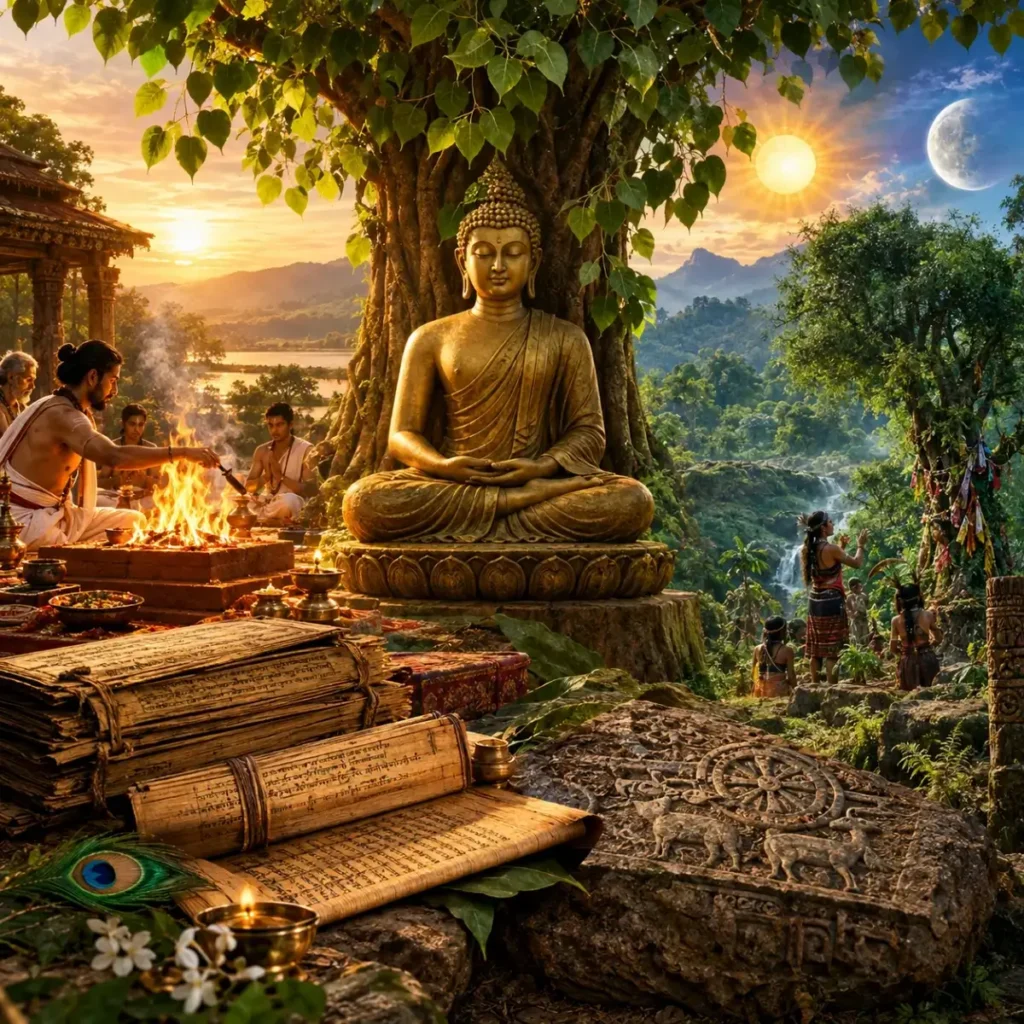
4. জনজাতীয় বিশ্বাসসমূহ (Tribal Beliefs)
ভাৰতবৰ্ষৰ চুকে-কোণে পৰম্পৰাগত জনজাতীয় বিশ্বাস প্ৰচলিত আছিল, যিয়ে প্ৰকৃতিক ঈশ্বৰৰ স্থান দিছিল। (Tribal beliefs traditionally revered nature and elevated it to the status of God.)
- অৰুণাচলৰ আদি আৰু অসমৰ মিচিং জনজাতিৰ লোকসকলে সূৰ্য আৰু চন্দ্ৰক ‘ড’নিপ’ল” (Donyi-Polo) ৰূপত পূজা কৰে।
- গাৰোসকলে ‘তাতাৰা ৰাবুগা’ (Tatara Rabuga) ক বিশ্বৰ সৃষ্টিকৰ্তা ৰূপত পূজা কৰে।
- মুণ্ডা আৰু চাওঁতালসকলে ‘চিংবংগা‘ (Singbonga) ক উপাসনা কৰে।
- অসমৰ বড়োসকলে উপাসনা কৰা ‘বাথৌবৌৰাই‘ (Bathoubwrai) ক প্ৰায়ে শিৱৰ লগত তুলনা কৰা হয়।
- মেঘালয়ৰ মাউল্লাং অৰণ্যক (Mawphlang forest) তাৰ বাসিন্দাসকলে পৱিত্ৰ (Sacred) বুলি গণ্য কৰে।
📌 SCERT Class 6 Social Science Textbook (Assamese Medium) PDF
15 Important Practice MCQs
1. বৈদিক যুগত ৰাজনৈতিক আৰু প্ৰশাসনীয় গোটসমূহৰ ভিতৰত আটাইতকৈ সৰু গোটটোৰ মুৰব্বীক কি বুলি কোৱা হৈছিল? (What was the head of the smallest political and administrative unit in the Vedic period called?)
(A) গ্ৰামণী (Gramani)
(B) বিশপতি (Vishpati)
(C) গৃহপতি (Grihapati)
(D) ৰাজন (Rajan)
শুদ্ধ উত্তৰ: (C) গৃহপতি (Grihapati)
ব্যাখ্যা: বৈদিক যুগত পৰিয়াল আছিল আটাইতকৈ সৰু গোট যাক ‘কুল’ বা ‘গৃহ’ বুলি জনা গৈছিল আৰু ইয়াৰ মুৰব্বীজনক গৃহপতি বোলা হৈছিল।
2. তলৰ কোনগৰাকী ব্যক্তি বৈদিক যুগৰ উল্লেখযোগ্য নাৰী নাছিল? (Which of the following persons was NOT a notable woman of the Vedic period?)
(A) বিশ্বৱাৰা (Vishwavara)
(B) লোপামুদ্ৰা (Lopamudra)
(C) অপলা (Apala)
(D) প্ৰজাপতি গৌতমি (Prajapati Gautami)
শুদ্ধ উত্তৰ: (D) প্ৰজাপতি গৌতমি (Prajapati Gautami)
ব্যাখ্যা: বিশ্বৱাৰা, লোপামুদ্ৰা, ঘোষ, অপলা আদি বৈদিক যুগৰ উল্লেখযোগ্য নাৰী আছিল যিয়ে বেদ, স্তোত্ৰ ৰচনা কৰাৰ উপৰি সভা-সমিতিত অংশ লৈছিল।
3. ‘লোকায়ত’ বুলি কোনটো প্ৰাচীন ভাৰতীয় দৰ্শনক জনা যায়? (Which ancient Indian philosophy is known as ‘Lokayata’?)
(A) জৈন মতবাদ (Jainism)
(B) জড়বাদ (Materialism)
(C) বৌদ্ধ মতবাদ (Buddhism)
(D) বেদান্ত (Vedanta)
শুদ্ধ উত্তৰ: (B) জড়বাদ (Materialism)
ব্যাখ্যা: চাৰ্বাকে প্ৰচাৰ কৰা জড়বাদক সাধাৰণ মানুহৰ মাজত জনপ্ৰিয় হোৱা কাৰণে ‘লোকায়ত’ বুলিও জনা যায়।
4. মহাবীৰৰ সম্পৰ্কে তলৰ কোনটো উক্তি অশুদ্ধ? (Which of the following statements about Mahavira is incorrect?)
(A) তেওঁ জৈন ধৰ্মৰ ২৪ তম আৰু শেষৰজন তীৰ্থংকৰ আছিল। (He was the 24th and last Tirthankara of Jainism.)
(B) তেওঁ লিচ্চভি সংঘৰাজ্যৰ ক্ষত্ৰিয় পৰিয়ালত জন্মগ্ৰহণ কৰিছিল। (He was born in a Kshatriya family of the Licchavi republic.)
(C) তেওঁ বৌদ্ধ ধৰ্মৰ ‘অষ্ট মাৰ্গ’ নীতিৰ প্ৰচাৰ কৰিছিল। (He preached the ‘Eightfold Path’ principle of Buddhism.)
(D) তেওঁক ‘জিন’ আৰু ‘জিতেন্দ্ৰীয়’ হিচাপে গণ্য কৰা হৈছিল। (He was regarded as ‘Jina’ and ‘Jitendriya’.)
শুদ্ধ উত্তৰ: (C) তেওঁ বৌদ্ধ ধৰ্মৰ ‘অষ্ট মাৰ্গ’ নীতিৰ প্ৰচাৰ কৰিছিল। (He preached the ‘Eightfold Path’ principle of Buddhism.)
ব্যাখ্যা: ‘অষ্ট মাৰ্গ’ (Eightfold Path) নীতিটো বৌদ্ধ ধৰ্মৰ লগতহে জড়িত, যিটো গৌতম বুদ্ধই প্ৰচাৰ কৰিছিল। মহাবীৰে অহিংসা, সত্য, অস্তেয়, ত্যাগ আৰু ব্ৰহ্মচাৰ্য— এই ৫ টা নীতিৰ কথা কৈছিল।
5. দাবী (Assertion – A): মহাবীৰে তেওঁৰ ধৰ্মীয় শিকনিসমূহ প্ৰধানকৈ সংস্কৃত ভাষাত প্ৰচাৰ কৰিছিল। (Mahavira preached his religious teachings mainly in the Sanskrit language.)
কাৰণ (Reason – R): প্ৰাকৃত ভাষাতকৈ সংস্কৃত ভাষা সেই সময়ৰ সাধাৰণ প্ৰজাৰ মাজত বেছি জনপ্ৰিয় আছিল। (The Sanskrit language was more popular among the common people of that time than the Prakrit language.)
(A) A আৰু R দুয়োটা শুদ্ধ আৰু R, A ৰ সঠিক ব্যাখ্যা। (Both A and R are true and R is the correct explanation of A.)
(B) A আৰু R দুয়োটা শুদ্ধ কিন্তু R, A ৰ সঠিক ব্যাখ্যা নহয়। (Both A and R are true but R is not the correct explanation of A.)
(C) A শুদ্ধ কিন্তু R ভুল। (A is true but R is false.)
(D) A আৰু R দুয়োটা ভুল। (Both A and R are false.)
শুদ্ধ উত্তৰ: (D) A আৰু R দুয়োটা ভুল। (Both A and R are false.)
ব্যাখ্যা: মহাবীৰে জৈন ধৰ্ম ‘প্ৰাকৃত ভাষাত’ (Prakrit language) হে প্ৰচাৰ কৰিছিল কাৰণ সেই সময়ত সাধাৰণ প্ৰজাই প্ৰাকৃতহে কৈছিল আৰু বুজি পাইছিল। দুয়োটা উক্তি ভুল।
6. গৌতম বুদ্ধই তেওঁৰ প্ৰথম বাণী ক’ত প্ৰচাৰ কৰিছিল? (Where did Gautama Buddha preach his first sermon?)
(A) বোধগয়া (Bodh Gaya)
(B) সাৰনাথ (Sarnath)
(C) কপিলাবস্তু (Kapilavastu)
(D) শ্ৰৱণবেলগোলা (Shravanabelagola)
শুদ্ধ উত্তৰ: (B) সাৰনাথ (Sarnath)
ব্যাখ্যা: গৌতম বুদ্ধই ‘বোধগয়া’ত দিব্যজ্ঞান লাভ কৰিছিল কিন্তু তেওঁৰ প্ৰথম বাণী তেওঁ সাৰনাথত মাত্ৰ পাঁচজন লোকক শুনাইছিল।
7. তলৰ তালিকাখন মিলাওক (জনজাতি আৰু তেওঁলোকৰ উপাস্য দেৱতা): (Match the following table (Tribes and their worshiped deities):)
| (a) মিচিং আৰু আদি (Mising and Adi) | 1. বাথৌবৌৰাই (Bathoubwrai) |
| (b) গাৰো (Garo) | 2. চিংবংগা (Singbonga) |
| (c) মুণ্ডা আৰু চাঁওতাল (Munda and Santhal) | 3. ড’নিপ’ল’ (Donyi-Polo) |
| (d) বড়ো (Bodo) | 4. তাতাৰা ৰাবুগা (Tatara Rabuga) |
(A) a-3, b-4, c-2, d-1
(B) a-4, b-3, c-1, d-2
(C) a-3, b-2, c-4, d-1
(D) a-1, b-4, c-2, d-3
শুদ্ধ উত্তৰ: (A) a-3, b-4, c-2, d-1
ব্যাখ্যা: মিচিং আৰু আদি জনজাতিয়ে ‘ড’নিপ’ল”, গাৰোসকলে ‘তাতাৰা ৰাবুগা’, মুণ্ডা আৰু চাঁওতালসকলে ‘চিংবংগা’, আৰু বড়োসকলে ‘বাথৌবৌৰাই’ ক পূজা কৰে।
8. বৌদ্ধ ধৰ্মৰ মূল গ্ৰন্থ ‘ত্ৰিপিটক’ ৰ অন্তৰ্গত তিনিখন পিটক কি কি? (What are the three Pitakas included in the main Buddhist text ‘Tripitaka’?)
(A) ঋগ, সাম আৰু যজু (Rig, Sama and Yaju)
(B) সুত্ত, বিনয় আৰু অভিধম্ম (Sutta, Vinaya and Abhidhamma)
(C) অংগ, উপাংগ আৰু প্ৰাৰিকৰ্ণ (Anga, Upanga and Prarikarna)
(D) শ্বেতাম্বৰ, দিগম্বৰ আৰু মহাযান (Svetambara, Digambara and Mahayana)
শুদ্ধ উত্তৰ: (B) সুত্ত, বিনয় আৰু অভিধম্ম (Sutta, Vinaya and Abhidhamma)
ব্যাখ্যা: বুদ্ধদেৱৰ মৃত্যুৰ পাছত তেওঁৰ শিষ্যসকলে পালি ভাষাত সুত্ত, বিনয় আৰু অভিধম্মপিটক সংকলিত কৰিছিল যাক একেলগে ত্ৰিপিটক বোলা হয়।
9. জৈন ধৰ্মৰ লোকসকল মূলতঃ কোন দুটা ভাগত বিভাজিত হৈছিল? (Jains were primarily divided into which two sects?)
(A) হীনযান আৰু মহাযান (Hinayana and Mahayana)
(B) শৈৱ আৰু বৈষ্ণৱ (Shaiva and Vaishnava)
(C) দিগম্বৰ আৰু শ্বেতাম্বৰ (Digambara and Svetambara)
(D) আস্তিক আৰু নাস্তিক (Astika and Nastika)
শুদ্ধ উত্তৰ: (C) দিগম্বৰ আৰু শ্বেতাম্বৰ (Digambara and Svetambara)
ব্যাখ্যা: মহাবীৰৰ মৃত্যুৰ পিছত তেওঁৰ অনুগামীসকল দিগম্বৰ (যিয়ে বস্ত্ৰ পৰিত্যাগ কৰে) আৰু শ্বেতাম্বৰ (যিয়ে বগা বস্ত্ৰ পৰিধান কৰে) ভাগত বিভাজিত হৈছিল। হীনযান আৰু মহাযান বৌদ্ধ ধৰ্মৰ ভাগহে।
10. তলৰ কোনখন ঠাইত অৱস্থিত বিশাল মূৰ্তিটো জৈনসকলৰ স্থাপত্যৰ এক উল্লেখযোগ্য চানেকী? (The huge statue located in which of the following places is a notable example of Jain architecture?)
(A) সাঁচী (Sanchi)
(B) অজন্তা (Ajanta)
(C) শ্ৰৱণবেলগোলা (Shravanabelagola)
(D) নালন্দা (Nalanda)
শুদ্ধ উত্তৰ: (C) শ্ৰৱণবেলগোলা (Shravanabelagola)
ব্যাখ্যা: মহীশূৰৰ ওচৰৰ শ্ৰৱণবেলগোলাত থকা মহাবীৰৰ (গোমতেশ্বৰৰ) বিশাল মূৰ্তি জৈনসকলৰ স্থাপত্যৰ এক উল্লেখযোগ্য চানেকী। সাঁচী আৰু নালন্দা বৌদ্ধ ধৰ্মৰ লগতহে জড়িত।
11. বেট্ৰিয়াৰ ৰজা মিনেন্দাৰে বৌদ্ধ ভিক্ষু নাগসেনৰ লগত কৰা ধৰ্মীয় প্ৰশ্ন-উত্তৰৰ সংকলনটোক কি বুলি জনা যায়? (What is the compilation of religious questions and answers between the Bactrian King Menander and the Buddhist monk Nagasena known as?)
(A) জাতক কথা (Jataka Tales)
(B) মিলিন্দ-পাঁহা (Milinda-Panha)
(C) কল্পসূত্ৰ (Kalpasutra)
(D) উপনিষদ (Upanishads)
শুদ্ধ উত্তৰ: (B) মিলিন্দ-পাঁহা (Milinda-Panha)
ব্যাখ্যা: ৰজা মিনেন্দাৰে বৌদ্ধ ভিক্ষু নাগসেনৰ সন্মুখত উত্থাপন কৰা প্ৰশ্ন আৰু উত্তৰসমূহ পুথি আকাৰে সংকলন কৰিছিল যাক ‘মিলিন্দ-পাঁহা’ বুলি জনা যায়।
12. বৈদিক যুগত কেইবাখনো ‘বিশ’ (Vish) লগ লাগি গঠিত হোৱা আটাইতকৈ ডাঙৰ ৰাজনৈতিক আৰু প্ৰশাসনীয় গোটটোক কি বোলা হৈছিল? (What was the largest political and administrative unit formed by joining several ‘Vish’ in the Vedic period called?)
(A) গ্ৰাম (Grama)
(B) জন (Jana)
(C) কুল (Kula)
(D) পৰিয়াল (Family)
শুদ্ধ উত্তৰ: (B) জন (Jana)
ব্যাখ্যা: কেইবাখনো ‘বিশ’ লগ লাগি একোখন ‘জন’ গঠিত হৈছিল, যি আছিল আটাইতকৈ ডাঙৰ ৰাজনৈতিক আৰু প্ৰশাসনীয় গোট আৰু ইয়াৰ মুৰব্বীজনক ‘ৰাজন’ বোলা হৈছিল।
13. মেঘালয়ৰ কোনখন অৰণ্যক তাৰ বাসিন্দাসকলে পৱিত্ৰ বুলি গণ্য কৰে আৰু তাত কোনো ধৰণৰ আৱৰ্জনা নেপেলায়? (Which forest in Meghalaya is considered sacred by its inhabitants and no waste is thrown there?)
(A) কাজিৰঙা (Kaziranga)
(B) মাউল্লাং (Mawphlang)
(C) মানস (Manas)
(D) নামদফা (Namdapha)
শুদ্ধ উত্তৰ: (B) মাউল্লাং (Mawphlang)
ব্যাখ্যা: মেঘালয়ৰ মাউল্লাং (Mawphlang sacred forest) অৰণ্যক তাৰ বাসিন্দাসকলে পৱিত্ৰ (Sacred) বুলি গণ্য কৰে আৰু ই প্ৰকৃতিক উপাসনা কৰা জনজাতীয় বিশ্বাসৰ এক সুন্দৰ নিদৰ্শন।
14. তলৰ কোনটো বেদৰ মূল ধাৰণা নহয় য’ত জন্ম আৰু মৃত্যুৰ চক্ৰৰ পৰা মুক্তি লাভ কৰাৰ কথা কোৱা হৈছে? (Which of the following is the core concept of the Vedas that talks about attaining liberation from the cycle of birth and death?)
(A) ধৰ্ম (Dharma)
(B) কৰ্ম (Karma)
(C) মোক্ষ (Moksha)
(D) অহিংসা (Ahimsa)
শুদ্ধ উত্তৰ: (C) মোক্ষ (Moksha)
ব্যাখ্যা: বেদত উল্লেখ থকা মূল ধাৰণাসমূহৰ ভিতৰত ‘মোক্ষ’ৰ অৰ্থ হৈছে আধ্যাত্মিক চিন্তা-চৰ্চাৰ জৰিয়তে জন্ম আৰু মৃত্যুৰ চক্ৰৰ পৰা মুক্তি লাভ কৰা।
15. জৈন ধৰ্মৰ প্ৰথম তীৰ্থংকৰ কোন আছিল? (Who was the first Tirthankara of Jainism?)
(A) মহাবীৰ (Mahavira)
(B) পাৰ্শ্বনাথ (Parshvanatha)
(C) ঋষভনাথ বা আদিনাথ (Rishabhanatha or Adinatha)
(D) গৌতম বুদ্ধ (Gautama Buddha)
শুদ্ধ উত্তৰ: (C) ঋষভনাথ বা আদিনাথ (Rishabhanatha or Adinatha)
ব্যাখ্যা: জৈন ধৰ্মত মুঠ ২৪ জন তীৰ্থংকৰ থকা বুলি বিশ্বাস কৰা হয়। ইয়াৰে প্ৰথমজন আছিল ঋষভনাথ (আদিনাথ) আৰু শেষৰজন (২৪ তম) আছিল মহাবীৰ।
Important Revision Points
📌 বেদৰ সময়কাল (Timeline of Vedas): খ্ৰীষ্টপূৰ্ব ১৫০০ ৰ পৰা ৫০০ ৰ ভিতৰত চাৰিখন বেদ (ঋগ, সাম, যজু, অথৰ্ব) প্ৰণয়ন কৰা হৈছিল। (The four Vedas were compiled between 1500 BC and 500 BC).
📌 বৈদিক প্ৰশাসন (Vedic Administration): বৈদিক যুগত সৰু গোট পৰিয়ালক ‘কুল’, গ্ৰামৰ মুৰব্বীক ‘গ্ৰামণী’, আৰু ডাঙৰ ৰাজনৈতিক গোট ‘জন’ৰ মুৰব্বীক ‘ৰাজন’ বোলা হৈছিল। (In the Vedic age, the smallest unit was ‘Kula’, village head was ‘Gramani’, and head of the largest unit ‘Jana’ was ‘Rajan’).
📌 জড়বাদ (Materialism/Lokayata): চাৰ্বাকে প্ৰচাৰ কৰা এই বেদ বিৰোধী মতবাদত ভগৱানক বিশ্বাস কৰা নহয়; মাটি, পানী, অগ্নি আৰু বায়ুক মূল বুলি ধৰা হয়। (Preached by Charvaka, this anti-Vedic philosophy doesn’t believe in God and considers earth, water, fire, and air as the core elements).
📌 মহাবীৰ (Mahavira): জৈন ধৰ্মৰ ২৪ তম আৰু শেষ তীৰ্থংকৰ; তেওঁ প্ৰাকৃত ভাষাত ধৰ্ম প্ৰচাৰ কৰিছিল আৰু অহিংসাক মূল নীতি হিচাপে গ্ৰহণ কৰিছিল। (The 24th and last Tirthankara of Jainism; he preached in Prakrit and adopted non-violence as the core principle).
📌 বৌদ্ধ ধৰ্ম (Buddhism): গৌতম বুদ্ধই (সিদ্ধাৰ্থ) প্ৰতিষ্ঠা কৰা এই ধৰ্মত ‘চাৰিটা মহৎ সত্য’ আৰু ‘অষ্ট মাৰ্গ’ মানি চলা হয়। বাণীসমূহ পালি ভাষাত ‘ত্ৰিপিটক’ ত আছে। (Founded by Gautama Buddha (Siddhartha), it follows ‘Four Noble Truths’ and ‘Eightfold Path’. Teachings are in the Pali text ‘Tripitaka’).
📌 নালন্দা আৰু তক্ষশীলা (Nalanda & Taxila): প্ৰাচীন বৌদ্ধ বিহাৰসমূহ যি পাছলৈ গণশিক্ষাৰ কেন্দ্ৰ হিচাপে গঢ়ি উঠিছিল। (Ancient Buddhist monasteries that later became centers of mass education).
📌 ড’নিপ’ল’ (Donyi-Polo): অৰুণাচলৰ আদি আৰু অসমৰ মিচিং জনজাতিৰ সূৰ্য আৰু চন্দ্ৰক প্ৰতিনিধিত্ব কৰা উপাস্য দেৱতা। (The worshiped deity representing the sun and moon of the Adi tribe of Arunachal and Mising tribe of Assam).
📌 চিংবংগা (Singbonga): মুণ্ডা আৰু চাঁওতাল আদিবাসীসকলে সমগ্ৰ পৃথিৱীখনৰ সৃষ্টি-কৰ্তা হিচাপে উপাসনা কৰে। (Worshipped by Munda and Santhal tribals as the creator of the entire world).
📌 শ্ৰৱণবেলগোলা (Shravanabelagola): মহীশূৰৰ ওচৰত অৱস্থিত এই ঠাইত গোমতেশ্বৰৰ বিশাল মূৰ্তি আছে যি জৈন স্থাপত্যৰ চানেকী। (Located near Mysore, it has the huge statue of Gommateshwara, an example of Jain architecture).
- Read Here: Social Sciemce Class 6 Chapter 9 Notes- ভাৰতীয় সংস্কৃতিৰ ভেটি
- Read Here: Social Science Class 6 Chapter 8 Notes- ভাৰতীয় সভ্যতাৰ আৰম্ভণি
- Read Here: Social Sciene Class 6 Chapter 7 Notes- মানুহৰ জীৱন-প্ৰণালীৰ বিকাশ
- Read Here: Social Science Class 6 Chapter 5 Notes- ভাৰত: পৰিচয় আৰু ভৌগোলিক বৈশিষ্ট্য


Hi, I’m Nirmal Thakuria, the founder of StudyBlink.com. I’m an educator and a competitive exam aspirant with a strong interest in helping students prepare better.
I have cleared competitive examinations such as SSC CGL and ADRE (Assam Direct Recruitment Examination – 1). At present, I’m preparing for the UPSC Civil Services Examination while continuing to create useful educational content for students and exam aspirants.